The most recent series features insects front and center in lushly detailed landscapes which elevate the story unfolding in the foreground. I want to bring to life a world in which these astonishing creatures are not background details or objects worthy of derision, as is often the case in Western cultures, but rather protagonists worthy of the same attention and reverence artists have historically afforded to the human figure.
It was impossible to ignore the siren song of the insect kingdom once they caught my attention. When you take the time to zoom in on insects, such an unexpected treat awaits—a tiny universe of shimmering gossamer wings, intricate patterns, deep rich mattes, flawlessly airbrushed gloss, patchy clouds of fur, and unusual pops of color—sometimes all in the same insect. The more closely I looked, the more there was to discover in these miniscule masterpieces. This series is an attempt to encourage that kind of looking.
By elevating insects into the starring role within landscapes largely inspired by the visual language of late Gothic and early Renaissance painting, I am trying to reconsider our relationship with these creatures and, more broadly, with the natural world. Insects are increasingly threatened by habitat loss, climate change, pesticides, and other consequences of our actions. I believe that cultivating a greater sense of wonder, attention, and respect for the non-human world is one way we can begin to reconsider our relationship with the natural systems that sustain our lives.
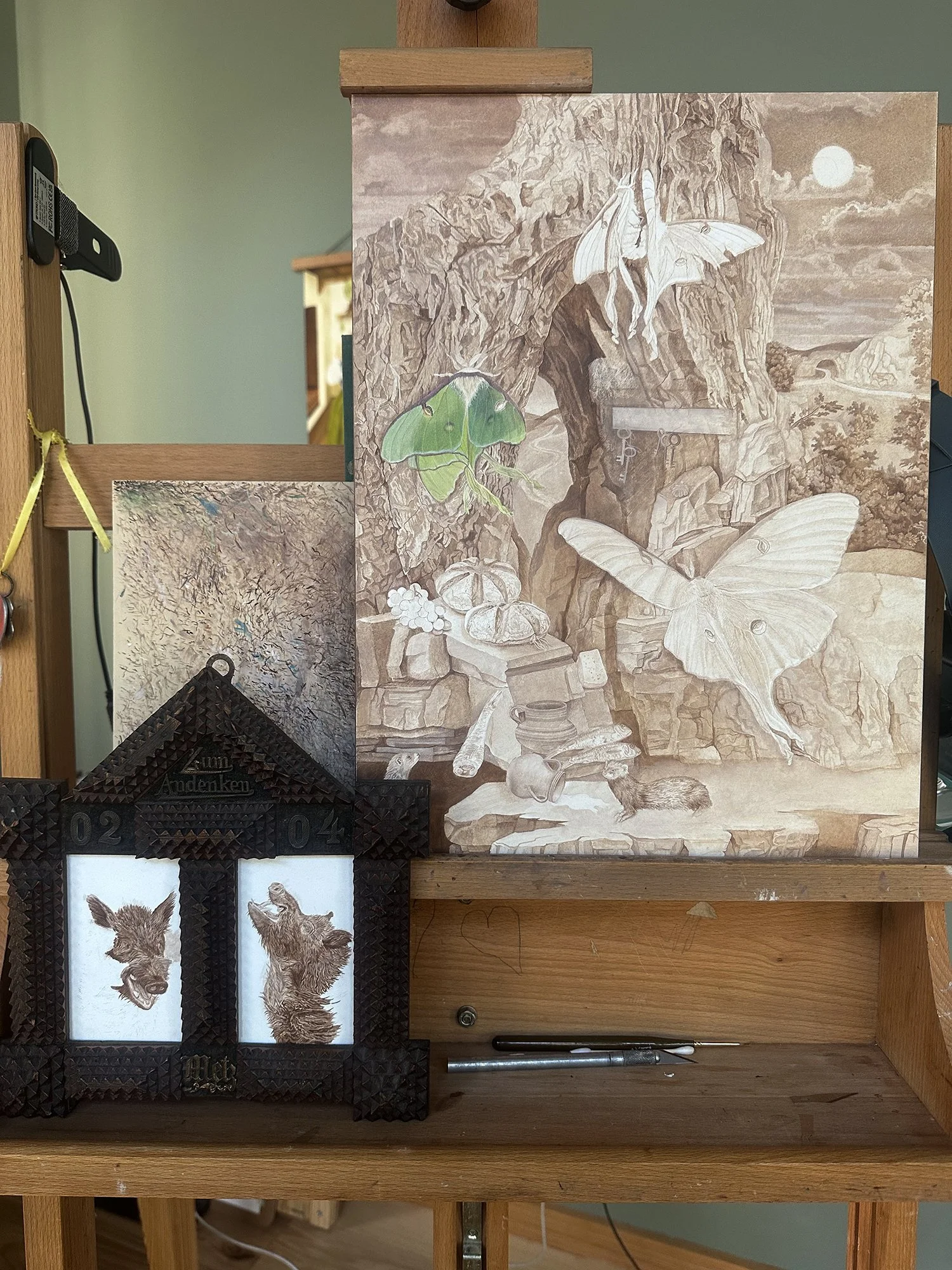
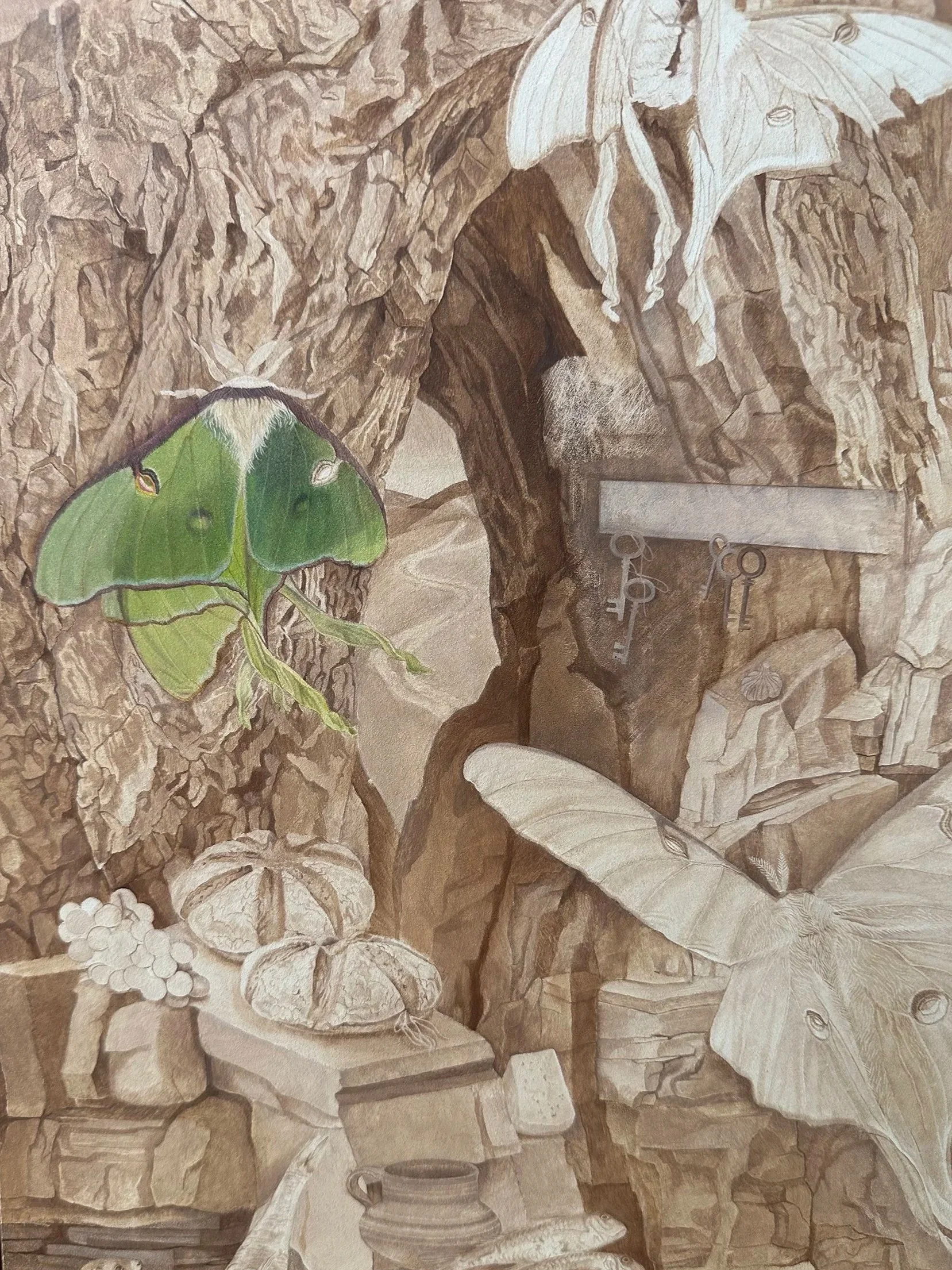
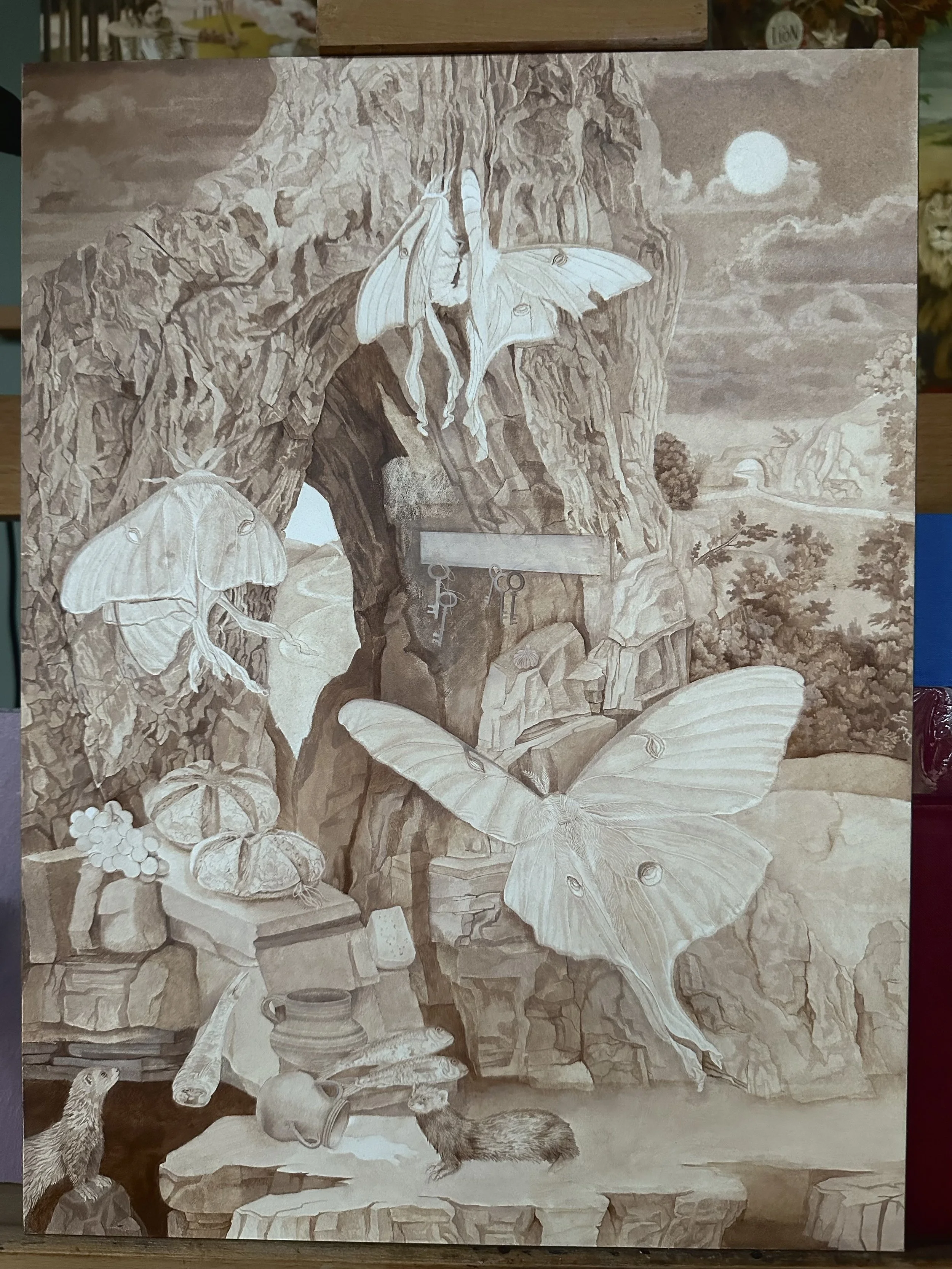
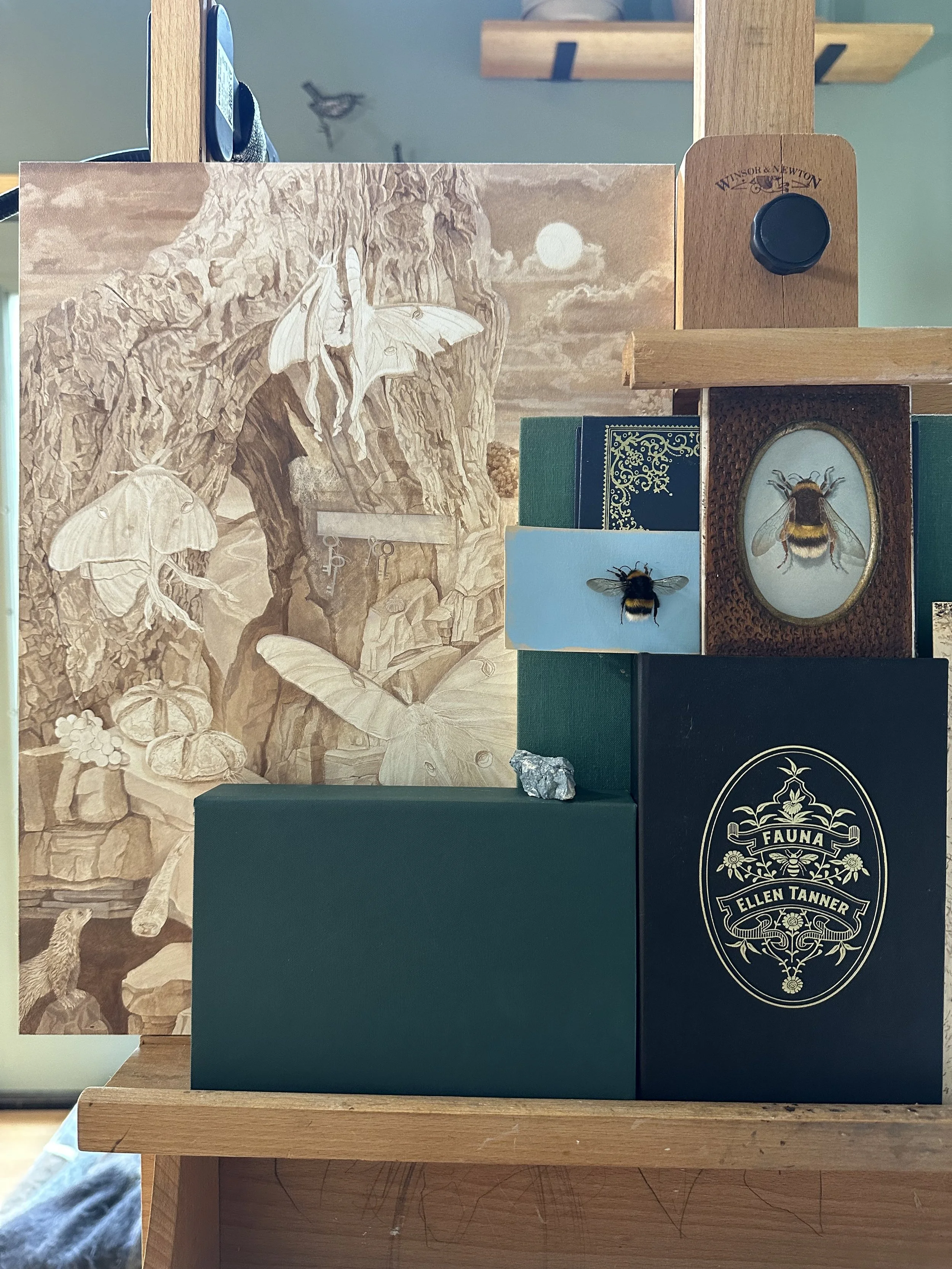
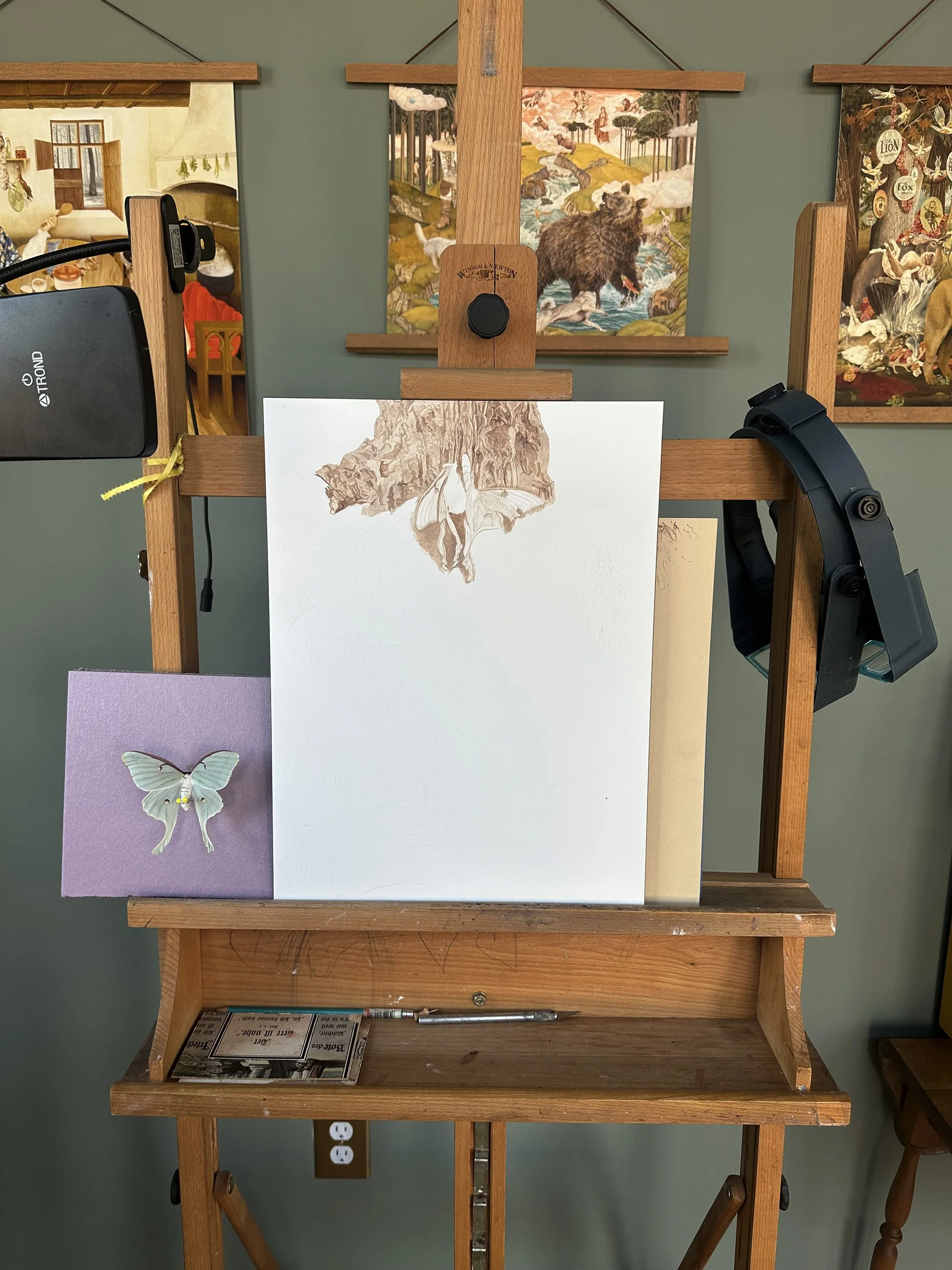
The second painting in the series, which is currently only partially complete, features luna moths, an ethereal-looking nocturnal moth associated with the moon, which have been described in different cultures as sacred messengers from the spirit world or guides that help navigate deep spiritual transitions. My composition features luna moths leading the viewer to a stone niche with an altar set with offerings to worship the goddess Hecate, who is also associated with the moon and spiritual thresholds. The inspiration for the composition came from late Gothic and early Renaissance paintings of St. Jerome in the wilderness. The paintings can take me 8–9 months to complete depending on my success at distillation of details I find necessary to bring the story to life.
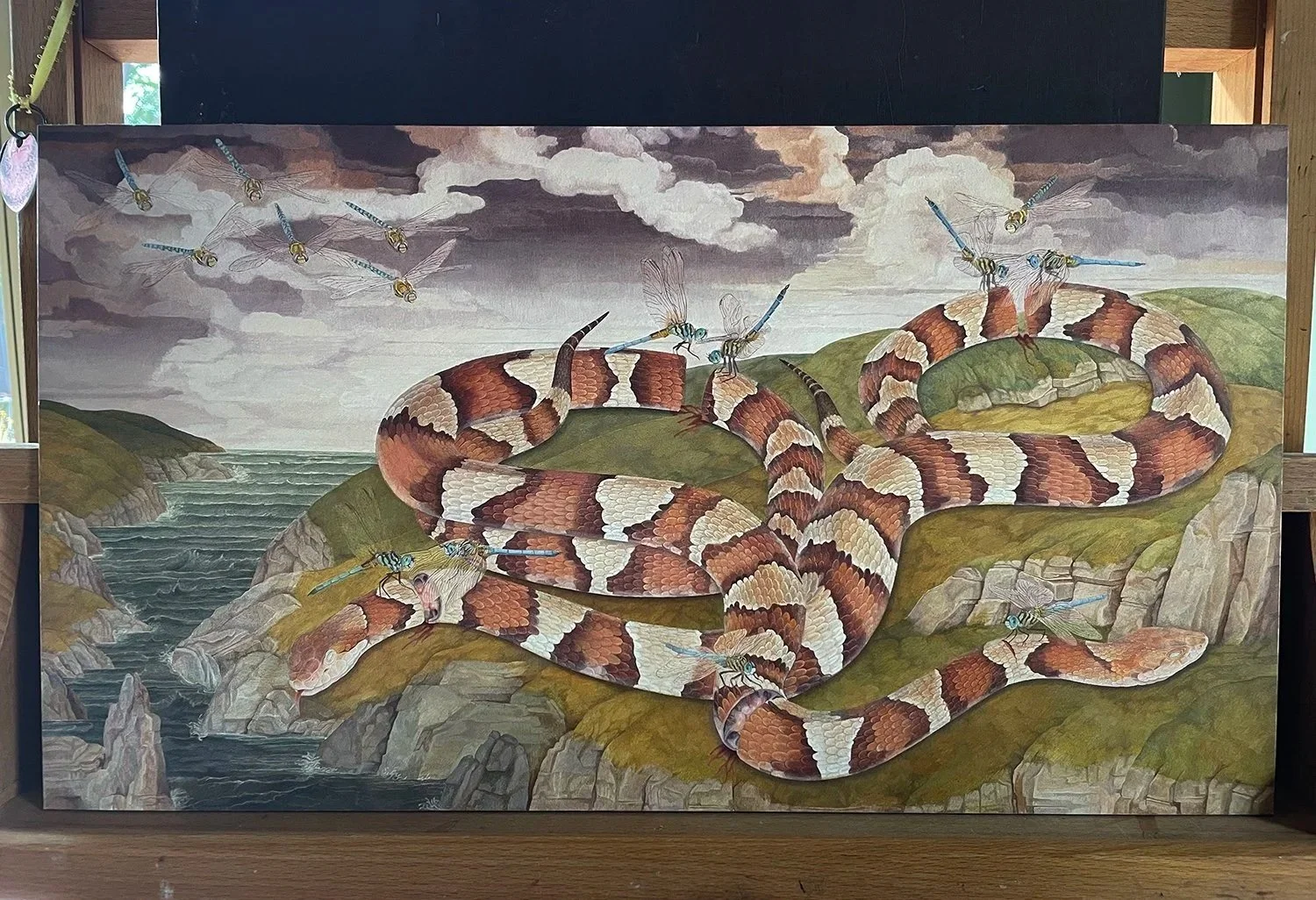
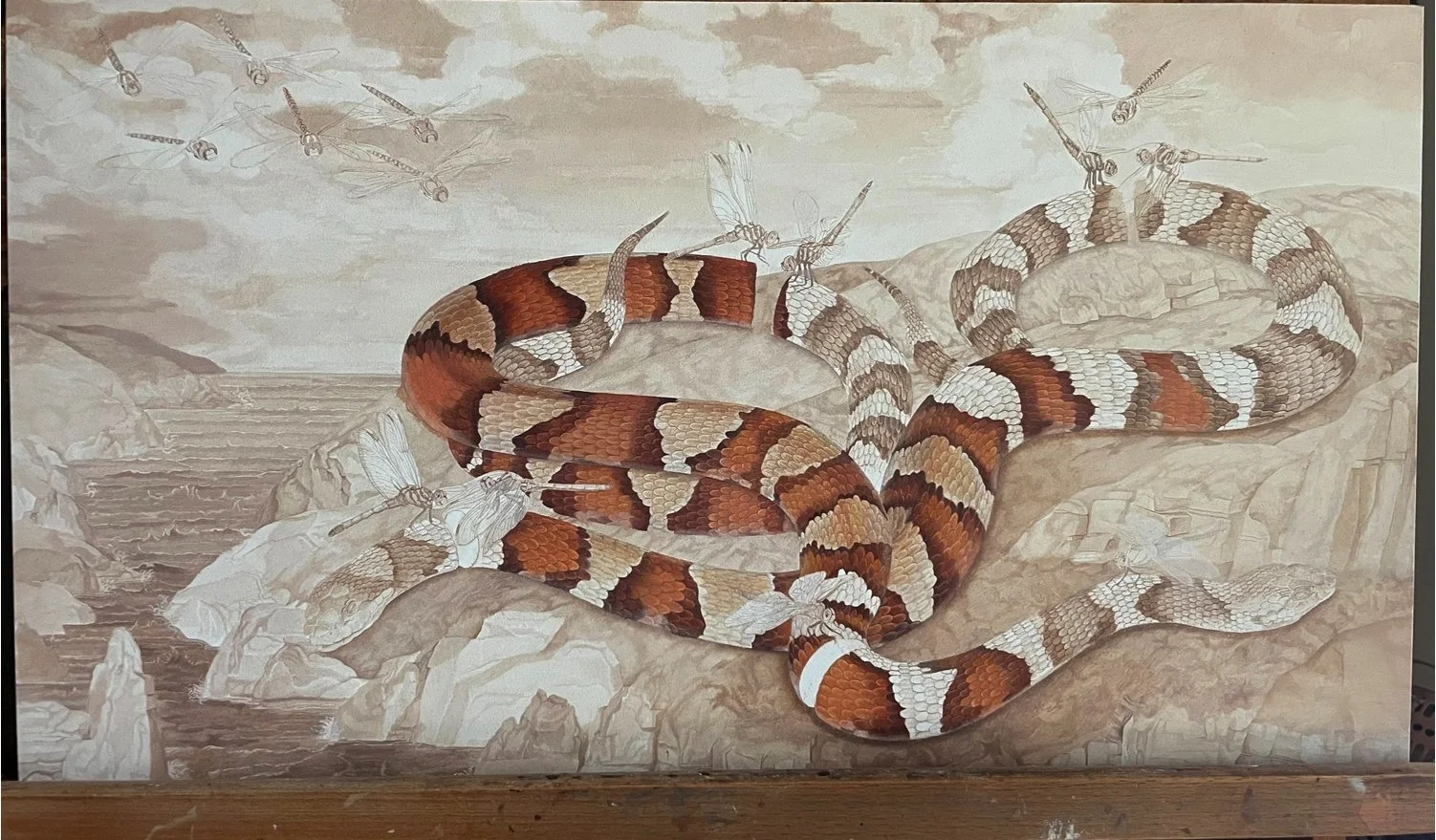
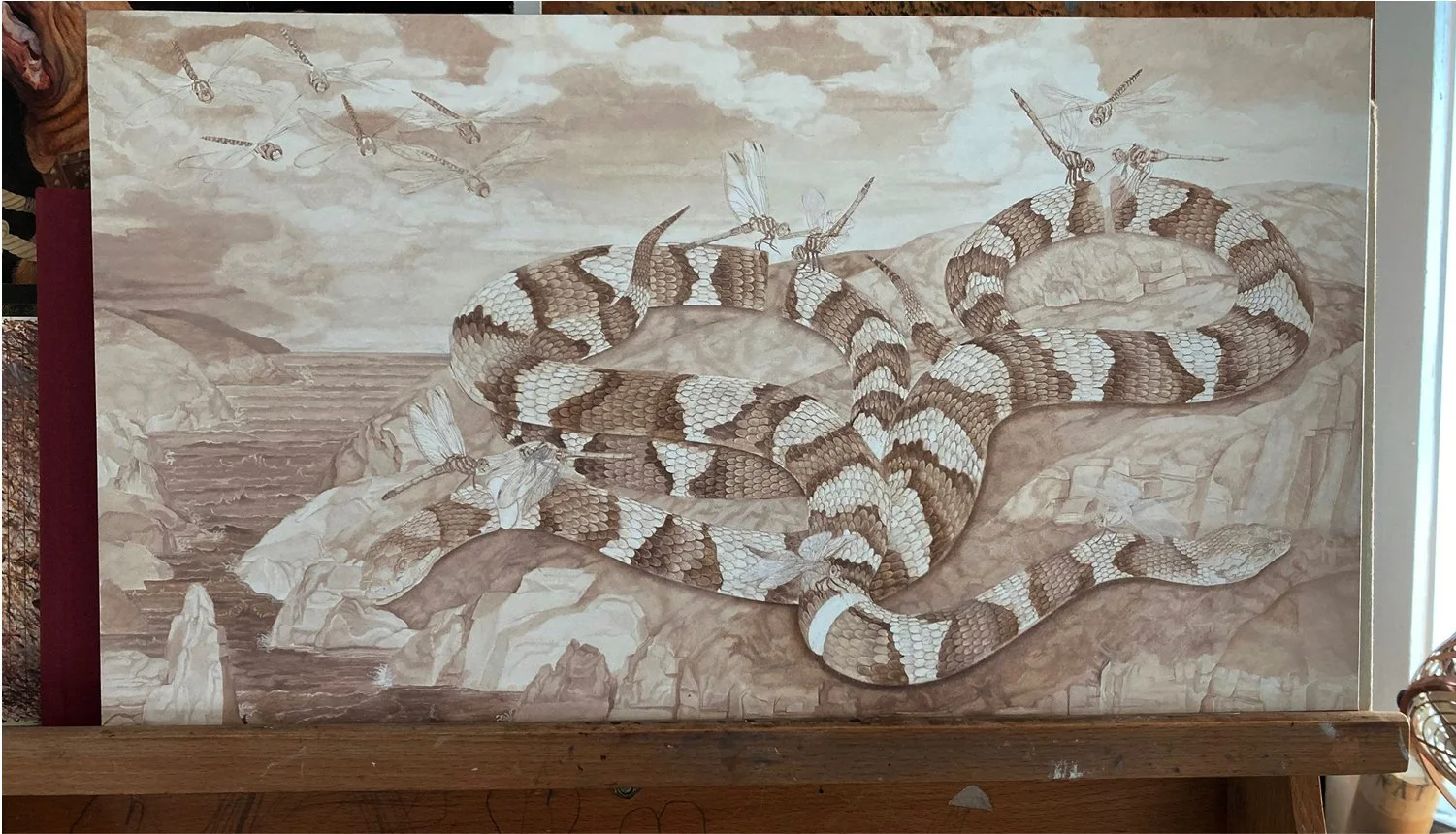
This is the first in a series exploring the intersection of human and insects vis a vis the folklore that has sprung up around them through the ages. This particular painting is 10x18 inches. In the south starting as far back as the 1800s there is evidence of people referring to dragonflies as “snake doctors.” This name came from the belief that dragonflies were in alliance with snakes and that they mended or repaired wounded snakes and restored them to their original vitality, particularly snakes who had been dismembered. Who knows what moment of magic between species the original source of this folklore witnessed, but I could not resist the opportunity to tackle this subject matter myself. In my version, 2 coiling copperheads caught in a moment of mating have been dismembered by a human and these dragonflies have descended in order to serve their purpose of stitching them back together. I have been practicing painting macro images of insect specimens for the better part of a year to get ready for this series. I hope I can distill the details of the 12 dragonflies in this painting and capture their shimmering, ethereal qualities, it will be a great challenge for me since that is not my forte. There will be a full landscape, sea and sky, so this one may take awhile.

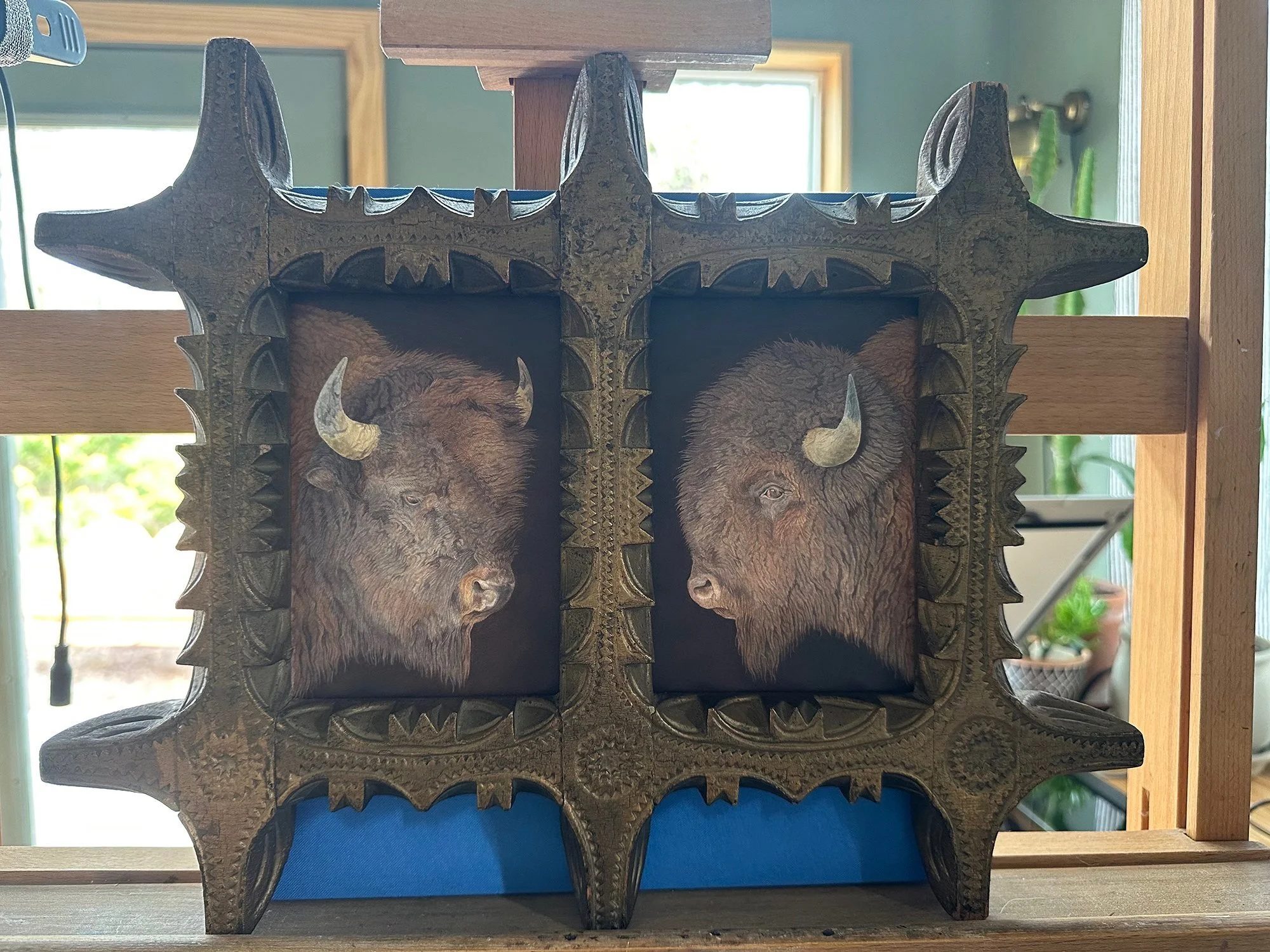
Weary/ Reproachful Bison Duo. oil on panel. 4in x 6in each.

Underpainting a WW1 Pigeon in a charming frame from the same era. Pigeons were used in WW1 to send messages between troops with the messages coiled in a capsule like container attached to their legs. Also around the same time there was some experimentation attaching cameras to them as a sort of precursor to the drone, although I didn’t see any evidence they were used this way during the war. Interesting nonetheless. 3in x 5in, oil on panel.

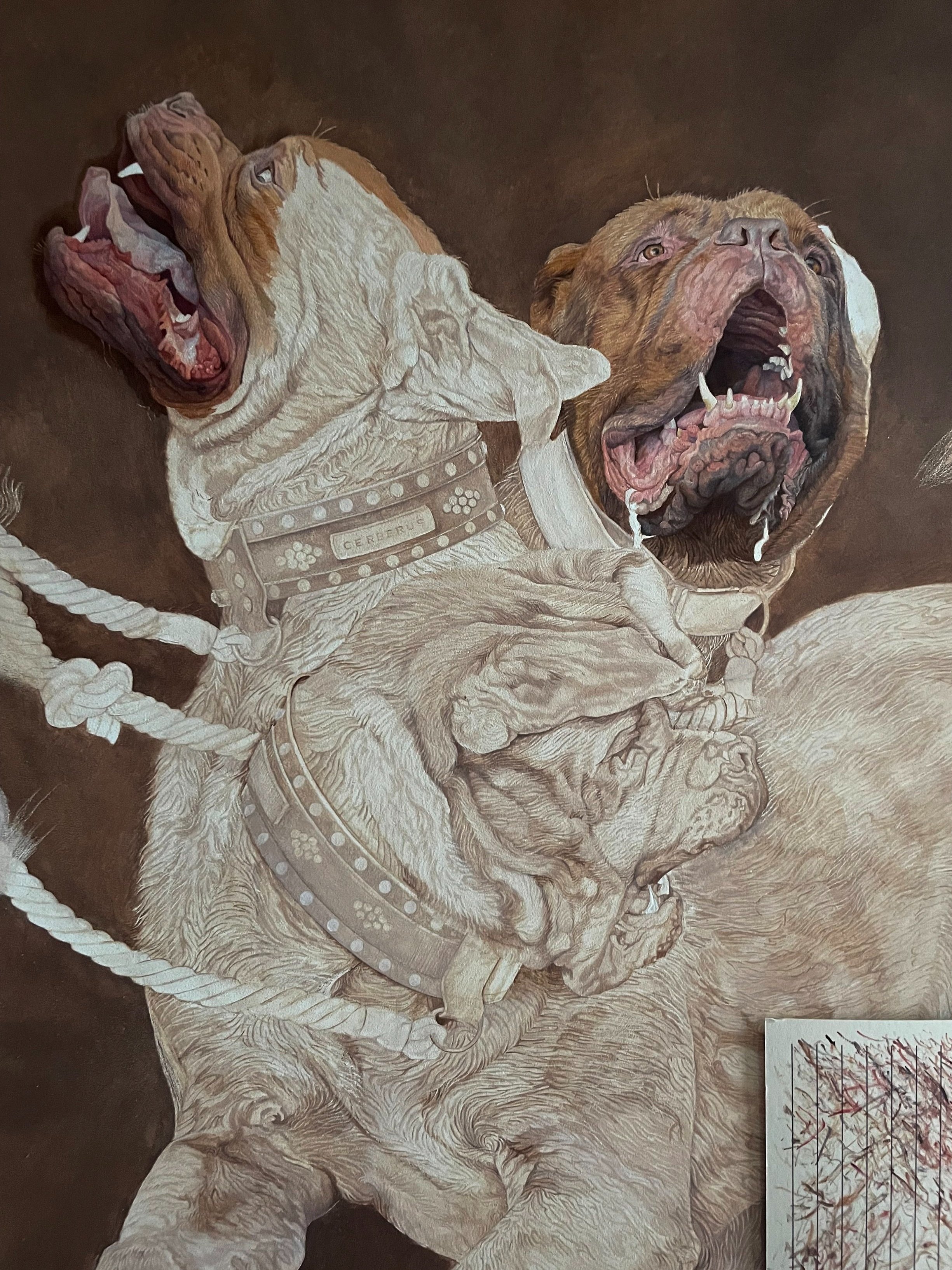

Zeus & Ganymeade Progress

oil on panel. 7 in x 11 in

Calydonian Boar
11/19/22 - 11 in x 14 in oil on panel, laying in first color layer on this wooly boar and co.

Spring/Summer Wrap-Up
Plenty of loose ends to tie up on all of these works from the past 6 months or so, but the end is in sight…
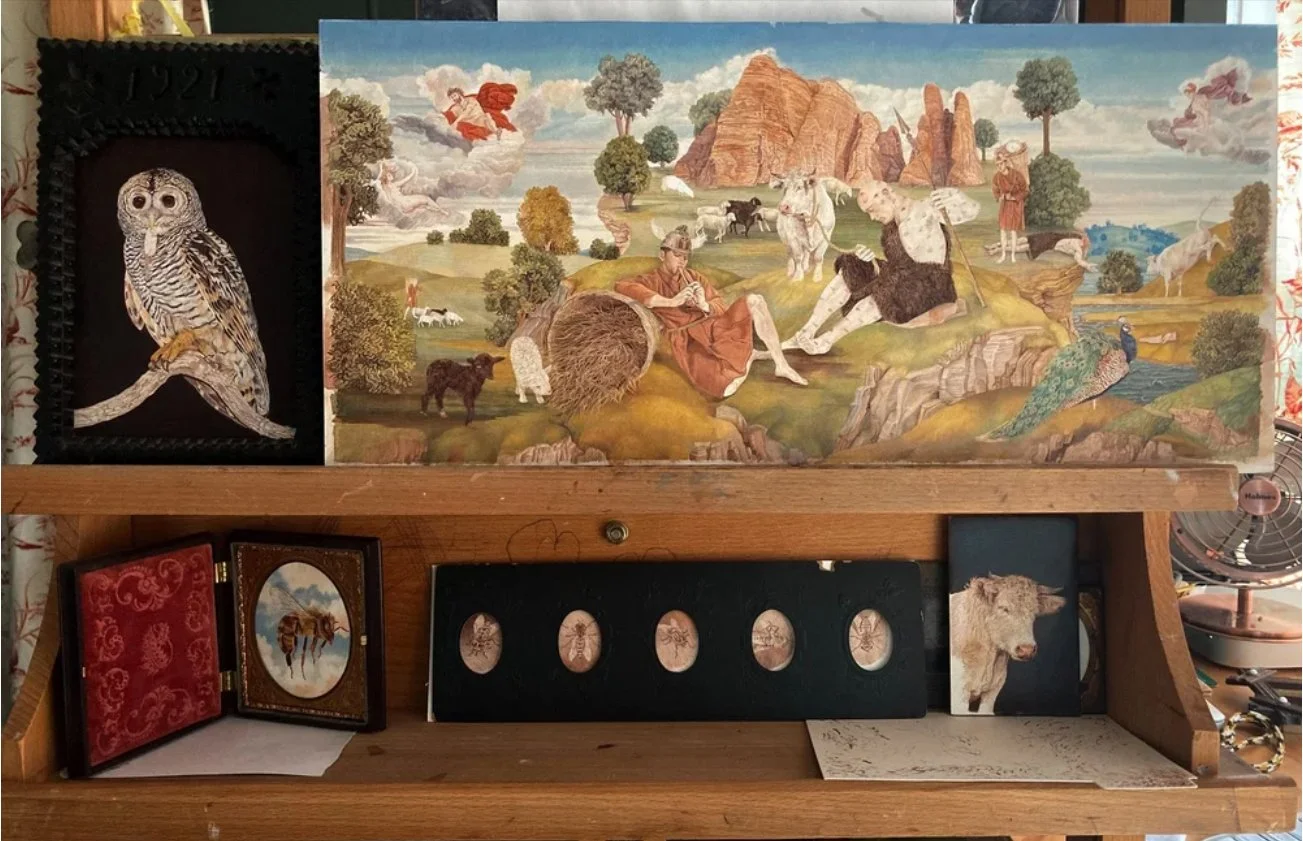

Detail of Io and Argos, 8in x 17.5in. Starting to lay in flesh tones on Argos and Hermes.